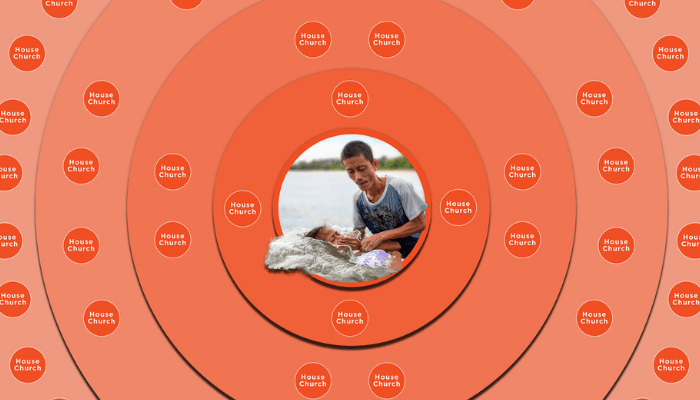
Empowered Disciples

Empowered Disciples

Zaul,* an Indonesian movement leader, partners with Bret,* a BEYOND movement servant.

During COVID, Zaul has been visiting a local prison. There he formed relationships with some radical Muslims and sought to bring God’s truth and love to them. As a result, a number of these men began to study God’s Word and eventually bowed to the sovereignty of our Heavenly Father. One of the men, Berkah,* wrote a letter to his whole family telling them of this great change in his life. He asked Zaul to deliver the letter to them personally.

Even though Zaul is comfortable in many settings, he was very nervous about delivering the letter. Nevertheless, he stayed close as Berkah’s family read it.

After they had finished reading, they asked if Zaul was a spiritual leader. “Yes,” he responded. Then they asked if he would be willing to more deeply discuss the things their son expressed.

“No,” Zaul responded. “But your son would be happy to walk with you as you read from the Holy Book.”

By handing the responsibility and privilege of sharing the gospel over to Berkah, Zaul is empowering a new disciple to immediately become a disciple-maker. This key component allows for the rapid multiplication of new believers in new households and regions.

Related Articles:
Bearing Fruit in a Radically Different Culture
Lessons from a Movement
A Fresh Macedonian Call

Trading Tradition for Multiplication

Trading Tradition for Multiplication

Samir* liked to talk with people about Jesus. So, noticing Frank’s* social media account, he left a message and hoped this stranger would reply.  

Frank did. After several conversations, he discovered that Samir and his father, Nuh*, have planted several churches and want to reach many more people. Since spring, Frank has been casting vision with Samir about what it would look like to see their whole nation reached with the gospel. They have had many discussions about the importance of being disciples who make disciples, who make disciples.

A few weeks ago, Samir and Nuh led a man to faith in Jesus. Samir remembered conversations with Frank about reaching whole families and helping people become disciple-makers. So instead of inviting this man to join their traditional church, they told him to gather his family and friends to learn about God together. 

When Samir and Nuh entered his village, they were surprised to see that he had gathered around 50 people! They immediately began to share the good news. Fifteen people became followers of Jesus, while others wanted to keep studying the Word. That day a new church was established in the village!

Shortly thereafter, Samir asked Frank to coach him on using multiplication principles in his ministry. Frank agreed to coach Samir if he first found others who would commit to be trained and apply the principles that Samir would pass on to them. Samir gathered some people, and he and Frank have already had their first “official” coaching session! 

*pseudonym


RELATED STORIES

TRUE DISCIPLESHIP
On Monday mornings, Joel* meets with Tazig* church leaders for debriefing and coaching. For several weeks, read more …

ONCE FROM PRISON …
Not long after his miraculous escape from slavery, Bahar moved his family to a new town. But catastrophic flooding read more …

HE TAUGHT A COMMUNIST REBEL …
Two years ago, Ethan and Nicole* led an introductory disciple-making training in the Philippines with 14 seminary-trained pastors read more …

The Cross in the Store

The Cross in the Store

A large cross is displayed in Mr. Li’s* store. It’s a bold move in a country where following Jesus can bring persecution. In suitable moments, he shares his faith with customers.

Matt* wanted to know Mr. Li better, to encourage him, and to impart some tools that would help Mr. Li become a multiplying disciple-maker, so he invited Mr. Li to his home.

Matt gave him a series of Bible stories chosen to help people learn who Christ Jesus is and what he has done for them. He showed Mr. Li how to read over the stories and then ask questions designed to lead seekers into a relationship with Christ and help them immediately share the truths they learn with others.

Matt warned Mr. Li of the potential restrictions and persecution that could occur if he pursued this approach. But when asked if he wanted to learn how Jesus made followers that made more followers, Mr. Li agreed eagerly and without hesitation.

“I was so encouraged to hear his story,” Matt says.  “and to know his desire to understand and apply Jesus’ principles to make followers, no matter the suffering he might have to endure.” When they meet again, Matt plans to take Mr. Li through a simple training on making disciples that multiply.

*pseudonyms


No Sign of Christmas

No Sign of Christmas

Christmas of 2020 was different for many of us. It was for *Charlie and *Sarah too. They had recently moved to a new country to serve God through BEYOND. 

The tropical heat and humidity were unusual, but the thing that stood out most significantly was the lack of any signs of the Christmas season. 

“It really grieved my heart,” Sarah shares. “It was almost as if Christ had not come. There was no celebration, no acknowledgment that He came, that there is victory over death, that our sins have been redeemed, that He reconciled us to the Father.”

Yes, over two billion people in the world still live in darkness — as if Jesus never graced the earth with His presence. 
We rejoice that Jesus came to reconcile us to our Father and that, through the faithful obedience of thousands of disciples, tens of thousands are celebrating their first Christmas this year. But so many still need to hear the Good News.
You can help bring the Light of the World to the darkest places.

*pseudonym

Part 2: What is a Church Planting Movement?

Part 2: What is a Church Planting Movement?

by Stan Parks

In modern Church Planting Movements we see dynamics similar to what God did in the early church:

  • The Holy Spirit empowering and sending. Ordinary people filled with the Spirit of an extraordinary God are being used to share the gospel, cast out demons, heal the sick, multiply disciples and churches, and bring the gospel to new places.
  • Believers pray constantly and show great faith. CPMs are marked by prayer. CPMs are an act of God, not a human work. Praying is one of Jesus’ basic commands, and every disciple realizes the need to multiply prayer for themself and for the movement.
  • Powerful witnessing through disciples’ treatment of others. Obeying Scripture leads disciples to love their neighbor. They feed the hungry, care for widows and orphans, and fight injustice. God wants lives and societies holistically transformed by the good news.
  • Numbers of disciples increase rapidly. This speed is the result of a powerful move of the Spirit as biblical principles are followed. In CPMs, every disciple learns that one of their main functions is to bear fruit. They do this as soon and as often as possible.
  • Disciples becoming obedient to God. Disciples take Scripture very seriously. All have the freedom to ask: “Where do you see that in the text?” Believers hear or read the Word, both privately and in groups. God is the foremost Teacher, through His Word, and they know they are accountable for obeying the Word.
  • Households being saved. Just like in Acts where households, multiple households and even sometimes communities turned to the Lord, movements are seeing the same thing. Most movements are happening among unreached people groups, most of which are very communal. In these cultures, decisions are usually made by families and/or clans.
  • Enduring opposition and persecution. CPMs often happen in the hardest places, resulting in significant persecution. Sometimes traditional church leaders report movements to avoid negative impacts for themselves. Persecution often comes from religious and/or government forces. But disciples overcome it by the blood of the Lamb and the word of their testimony.
  • Disciples being filled with the Holy Spirit and joy. Despite opposition, believers have tremendous joy. Having come from darkness into the light, they are motivated to share the good news. Often those persecuted rejoice that God has counted them worthy to suffer for his Name.
  • The Word spreading through the whole region.  Acts 19 reports that the gospel spread throughout the Roman province of Asia in just two years. Movements have the same incredible dynamic! Millions from different regions are hearing the gospel for the first time in a few short years because of the tremendous multiplication of disciples.
  • The gospel spreading to new languages and nations. Unless a movement fits its context, it will fail. Beginning with first contact, the outsider looks for a person of peace who can become the church planter. Outsiders often introduce foreign patterns of faith. But outsiders can help insiders focus on the biblical truth to plant churches with less foreign influence. Fruit is born in ways natural to that culture yet rooted in Scripture. Thus the gospel can spread more rapidly.A CPM has certain characteristics.
  1. Awareness that only God can start a movement. At the same time, disciples follow biblical principles that can lead to a “book of Acts” type movement.
  2. Every disciple is encouraged to be a reproducing disciple, not merely a convert.
  3. Frequent and regular accountability for obeying the Lord’s instruction to each person and for lovingly passing on God’s truth to others. Accountability happens through active involvement in a small group.
  4. Each disciple is equipped for spiritual maturity including interpreting and applying Scripture, having a well-rounded prayer life, living as a part of the larger Body of Christ, and responding well to persecution/suffering. Equipping enables believers to function as active agents of Kingdom advance.
  5. Each disciple is given a vision for reaching their relational network and extending God’s Kingdom to the ends of the earth. Believers learn to minister with others in every context.
  6. Reproducing churches form as part of the process of multiplying disciples. A CPM aims for 1) disciples, 2) churches, 3) leaders and 4) movements to multiply endlessly by the power of the Spirit.
  7. CPMs focus on starting movements of multiplying generations of churches. (The first churches are generation one churches, which start generation two churches, and so on.)
  8. Leaders evaluate and make radical changes as needed to grow. They make sure that each element is 1) biblical and 2) can be followed by generations of disciples. This requires keeping things very simple.We are now seeing the gospel spread in many places as it did in the book of Acts. We long to see this happen in every people and place in our generation!

MISSED PART ONE? READ IT HERE