Isa (Jesus) Sent You Here

Isa (Jesus) Sent You Here

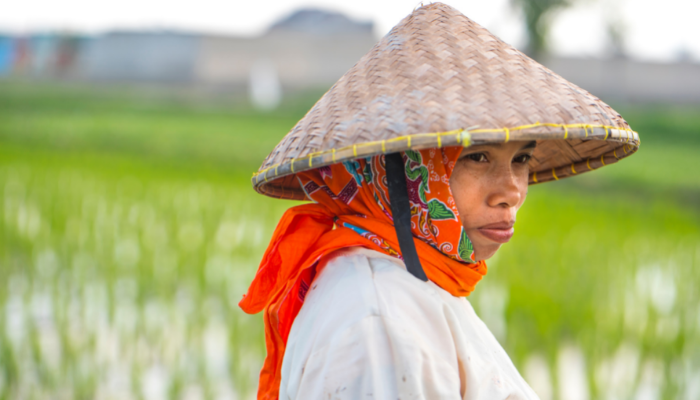
While looking for people of peace, a local team met Mrs. Nuri.* After chatting for a bit, she told the team that she used to work as a dukun (shaman).

In Indonesian culture, especially in rural villages, people commonly go to a spiritual healer if someone is sick or suffering from a prolonged or difficult illness. These dukuns exercise spiritual power and often have demonic manifestations.  
It soon became clear that Mrs. Nuri had allowed demonic influences into her life. But when our team entered her house, she acknowledged that the Spirit of the Lord was on them.  

They shared some stories with Mrs. Nuri and talked about the power and hope they have in Jesus. As the team left, Mrs. Nuri invited them to come back the following week.  

When they returned, they shared stories from the Bible illustrating the power in Jesus’ name and the freedom His followers have. Mrs. Nuri admitted that she had seen Isa (Jesus) in a dream when she was younger. “Yes,” she agreed, “it seems like Isa sent you here.” 

Would you please pray for Mrs. Nuri? She is afraid of persecution from her community if she were to become a follower of Jesus. Pray that Mrs.Nuri would accept the Truth and experience freedom in Him, and that her whole community would come to know Isa through this influential woman.

*pseudonym

Part 2: What is a Church Planting Movement?

Part 2: What is a Church Planting Movement?

by Stan Parks

In modern Church Planting Movements we see dynamics similar to what God did in the early church:

  • The Holy Spirit empowering and sending. Ordinary people filled with the Spirit of an extraordinary God are being used to share the gospel, cast out demons, heal the sick, multiply disciples and churches, and bring the gospel to new places.
  • Believers pray constantly and show great faith. CPMs are marked by prayer. CPMs are an act of God, not a human work. Praying is one of Jesus’ basic commands, and every disciple realizes the need to multiply prayer for themself and for the movement.
  • Powerful witnessing through disciples’ treatment of others. Obeying Scripture leads disciples to love their neighbor. They feed the hungry, care for widows and orphans, and fight injustice. God wants lives and societies holistically transformed by the good news.
  • Numbers of disciples increase rapidly. This speed is the result of a powerful move of the Spirit as biblical principles are followed. In CPMs, every disciple learns that one of their main functions is to bear fruit. They do this as soon and as often as possible.
  • Disciples becoming obedient to God. Disciples take Scripture very seriously. All have the freedom to ask: “Where do you see that in the text?” Believers hear or read the Word, both privately and in groups. God is the foremost Teacher, through His Word, and they know they are accountable for obeying the Word.
  • Households being saved. Just like in Acts where households, multiple households and even sometimes communities turned to the Lord, movements are seeing the same thing. Most movements are happening among unreached people groups, most of which are very communal. In these cultures, decisions are usually made by families and/or clans.
  • Enduring opposition and persecution. CPMs often happen in the hardest places, resulting in significant persecution. Sometimes traditional church leaders report movements to avoid negative impacts for themselves. Persecution often comes from religious and/or government forces. But disciples overcome it by the blood of the Lamb and the word of their testimony.
  • Disciples being filled with the Holy Spirit and joy. Despite opposition, believers have tremendous joy. Having come from darkness into the light, they are motivated to share the good news. Often those persecuted rejoice that God has counted them worthy to suffer for his Name.
  • The Word spreading through the whole region.  Acts 19 reports that the gospel spread throughout the Roman province of Asia in just two years. Movements have the same incredible dynamic! Millions from different regions are hearing the gospel for the first time in a few short years because of the tremendous multiplication of disciples.
  • The gospel spreading to new languages and nations. Unless a movement fits its context, it will fail. Beginning with first contact, the outsider looks for a person of peace who can become the church planter. Outsiders often introduce foreign patterns of faith. But outsiders can help insiders focus on the biblical truth to plant churches with less foreign influence. Fruit is born in ways natural to that culture yet rooted in Scripture. Thus the gospel can spread more rapidly.A CPM has certain characteristics.
  1. Awareness that only God can start a movement. At the same time, disciples follow biblical principles that can lead to a “book of Acts” type movement.
  2. Every disciple is encouraged to be a reproducing disciple, not merely a convert.
  3. Frequent and regular accountability for obeying the Lord’s instruction to each person and for lovingly passing on God’s truth to others. Accountability happens through active involvement in a small group.
  4. Each disciple is equipped for spiritual maturity including interpreting and applying Scripture, having a well-rounded prayer life, living as a part of the larger Body of Christ, and responding well to persecution/suffering. Equipping enables believers to function as active agents of Kingdom advance.
  5. Each disciple is given a vision for reaching their relational network and extending God’s Kingdom to the ends of the earth. Believers learn to minister with others in every context.
  6. Reproducing churches form as part of the process of multiplying disciples. A CPM aims for 1) disciples, 2) churches, 3) leaders and 4) movements to multiply endlessly by the power of the Spirit.
  7. CPMs focus on starting movements of multiplying generations of churches. (The first churches are generation one churches, which start generation two churches, and so on.)
  8. Leaders evaluate and make radical changes as needed to grow. They make sure that each element is 1) biblical and 2) can be followed by generations of disciples. This requires keeping things very simple.We are now seeing the gospel spread in many places as it did in the book of Acts. We long to see this happen in every people and place in our generation!

MISSED PART ONE? READ IT HERE

Part 1: What is a Church Planting Movement?

Part 1: What is a Church Planting Movement?

by Stan Parks

A Church Planting Movement (CPM) can be defined as the multiplication of disciples making disciples and leaders developing leaders. This results in indigenous churches planting churches. These churches spread quickly through a people group or population segment. Communities are transformed as new disciples and churches live out Kingdom values. 

When churches reproduce consistently to four generations in multiple streams, the process becomes a sustained movement. It may take years to begin. But once the first churches start, we usually see a movement reach four generations within three to five years. In addition, the movements themselves often reproduce new movements within other people groups and population segments.

God’s Spirit is launching CPMs around the world using a variety of models or strategies. Terms used to describe these models include Training for Trainers (T4T), Discovery, Discovery Bible Study (DBS), Disciple Making Movements (DMM), Four Fields, Rapidly Advancing Discipleship (RAD), Zume, etc. Many movements are hybrids of these various approaches, and many have developed indigenously outside of these training models.

Church planting movements resemble what we see in the New Testament.

“But you will receive power when the Holy Spirit comes on you; and you will be my witnesses in Jerusalem, and in all Judea and Samaria, and to the ends of the earth.” (Acts 1:8)

All of them were filled with the Holy Spirit and began to speak in other tongues as the Spirit enabled them…. Utterly amazed, they asked: ‘Aren’t all these who are speaking Galileans? Then how is it that each of us hears them in our native language? Parthians, Medes and Elamites; residents of Mesopotamia, Judea and Cappadocia, Pontus and Asia, Phrygia and Pamphylia, Egypt and the parts of Libya near Cyrene; visitors from Rome (both Jews and converts to Judaism); Cretans and Arabs—we hear them declaring the wonders of God in our own tongues!’ (Acts 2:4,7-11)

But many who heard the message believed; so the number of men who believed grew to about five thousand. (Acts 4:4)

So the word of God spread. The number of disciples in Jerusalem increased rapidly, and a large number of priests became obedient to the faith. (Acts 6:7)

So the church throughout all Judea and Galilee and Samaria had peace and was being built up. And walking in the fear of the Lord and in the comfort of the Holy Spirit, it multiplied. (Acts 9:31)

But the word of God continued to spread and flourish. (Acts 12:24)

The word of the Lord spread through the whole region. But the Jewish leaders incited the God-fearing women of high standing and the leading men of the city. They stirred up persecution against Paul and Barnabas, and expelled them from their region. So they shook the dust off their feet as a warning to them and went to Iconium. And the disciples were filled with joy and with the Holy Spirit. (Acts 13:49-52)

When they had preached the gospel to that city and had made many disciples, they returned to Lystra and to Iconium and to Antioch, strengthening the souls of the disciples, encouraging them to continue in the faith, and saying that through many tribulations we must enter the kingdom of God. (Acts 14:21-22)

And some of them were persuaded and joined Paul and Silas, as did a great many of the devout Greeks and not a few of the leading women…. Many of them therefore believed, with not a few Greek women of high standing as well as
men . . .(Acts 17:4, 12)

Crispus, the ruler of the synagogue, believed in the Lord, together with his entire household. And many of the Corinthians hearing Paul believed and were baptized. And the Lord said to Paul one night in a vision, ‘Do not be afraid, but go on speaking and do not be silent, for I am with you, and no one will attack you to harm you, for I have many in this city who are my people.’ . . . (Acts 18:8-11)

This continued for two years, so that all the residents of Asia heard the word of the Lord, both Jews and Greeks. (Acts 19:10)

In these modern movements we see similar dynamics to what God did in the early church.

(Part two describes the dynamics and characteristics of a CPM.) Read PART TWO

If Jesus Suffered a Judas, So Could We

If Jesus Suffered a Judas, So Could We

“Where the persecution is strongest, the work will be the most. We have seen it before.”– Sanjay, a North Indian movement leader

Disciples of Jesus in India face persecution regularly. Recently, movement leaders sent BEYOND teammates photos of a bruised young man. He’d been beaten by radical Hindus and the police. In another area, police arrested two disciples for studying the Bible and imprisoned them for five days.

The leaders estimate that every day about 50% of the movement faces persecution in some form: verbal abuse, intimidation, being barred from village wells, abuse from unbelieving relatives, house church raids, even martyrdom. 

Sadly, it is not uncommon for “traditional institutionally focused” believers to betray house churches to radical Hindu groups, but we shouldn’t be surprised. According to Jesus, disciples aren’t greater than their master. If Jesus suffered a Judas, so could we.  (John 15:20)

By the same token, if Jesus taught His followers about persecution early in their walk, so should we. Thus, leaders share biblical examples of persecution with each family who wants to follow Jesus. Then they ask, How will you apply this story when persecution comes?

Leaders also pass on wisdom learned from their own arrests. Call your mentor. Tell the police that no one forced you to follow Jesus, and no one is paying you.

Finally, leaders teach new followers how to stand firm when “traditional” Christians attempt to hinder them. Jesus’ disciples shared the Good News without being ordained. They baptized others and met in their own homes. So can you.

The movement churches are not shrinking back. They’re loving their enemies and praying for their persecutors while boldly obeying Jesus’ command to go and make disciples of the lost. It’s a modern-day echo of Acts chapter four.

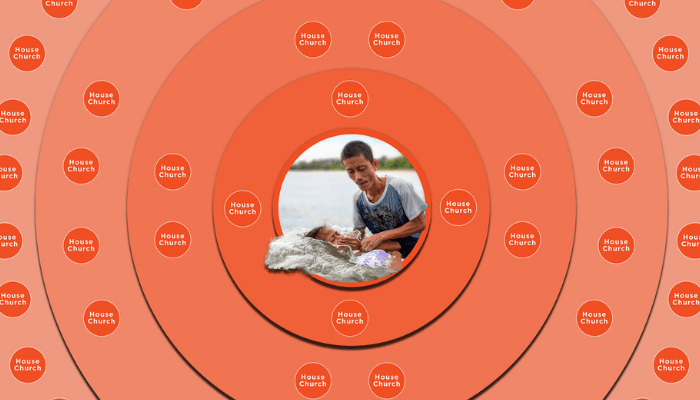
And just as God grew His church in the book of Acts, He is growing it today. Last year, there were 60,000 house churches in the movement. This year, there are 120,000!

*pseudonym

The Person, Not the Method

The Person, Not the Method

by Emanuel Prinz with Dave Coles

Over a period of three years, I conducted empirical research among effective movement catalysts to discover the traits and competencies possessed by pioneers effective in catalyzing a movement among a Muslim people group and which traits they considered to have contributed to their catalyzing of a movement. This resulted in a profile of an effective movement catalyst, including eleven traits and competencies self-reported as exhibited by all participating effective catalysts.

The data of my research suggest that the effective catalyzing of movements is not tied to any particular methodology, though all employed reproductive movement approaches. Different effective catalysts employ different ministry approaches, both in terms of their movement methodology and in their approach to contextualization. A quarter of the catalysts participating in this study skipped the question about their ministry approach, which points to likely hesitation on their side to put their approach “into a box.” In addition, more than half of those who answered the question used the “Other” option to describe their ministry approach in their own words. Often the description given was a hybrid of two or more of the other approaches. This means that the approach of most effective catalysts in this study is a hybrid of more than one ministry approach, which they have adapted to the uniqueness of their context. The research does not support any claims that one specific ministry approach must be followed precisely to lead to a movement.

With the exception of the approach of adding Muslim Background Believers (MBBs) to existing Christian Background Believer (CBB) churches, it appears that particularity of methodology does not correlate to success in catalyzing a movement. By definition, the traditional approach (planting a single church) is not conducive to catalyzing a movement. This could explain why the pattern of adding MBBs to existing CBB churches is not utilized by any effective catalysts. At the same time, 13% of the catalysts employed the approach of planting a new church comprised of MBBs which then reproduced itself and grew into a movement. The difference in these approaches is not methodological, but primarily sociocultural. The adding of MBBs to CBB churches involves the bridging of divides, whether sociological, cultural, ethnic, or linguistic. These barriers explain why adding MBBs to existing CBB churches is not an effective approach for catalyzing a CPM, whereas planting a new MBB church may be. Still, only 13% of all movements examined have been catalyzed with such an approach.

The overwhelming majority of movements were catalyzed with one of the various movement approaches (those of D. Garrison, Watsons/Trousdale, S. Smith). These approaches have certain principles in common, including cultural contextualization, obedience-oriented discipleship, house churches, reproduction, training of multipliers, and reproducible resources. The overall emphasis in pioneer and apostolic leadership and movement literature has been on right methodology, with some attention to leader traits and competencies of the pioneer leader or leaders, particularly traits of a spiritual nature. However, the findings of this research go beyond the commonly established insights of Christian pioneer leadership. The data clearly suggest that a particular methodology is far less significant in catalyzing movements than may have been assumed or publicized. The data of this study clearly establish that certain pioneer leader traits and competencies are strongly associated with effective catalyzing of CPMs. This perspective has been voiced by only a few, most notably Neill Mims and Bill Smith, who formulated what are considered to be among the most significant insights of almost 20 years of research into CPMs: “At the end of the day, it is the man or woman of God and not the method that God blesses.”

Another of the few voices who have expressed this perspective is movement thinker Dave Ferguson, who concluded: “the greater the missional impact, the more obvious the pioneering apostolic leadership becomes.” The person of the pioneer leader(s), not the method he or she employs, plays the greatest role in determining whether or not a movement will result. Bill Smith is again among the few who formulated this accurate conclusion: “If someone says to me, give me the method or give me the curriculum, I know that they have not understood that this [the catalyzing of a movement] is accomplished through persons rather than methods.”

The right leader(s) will employ the right methodology. A pioneer leader with traits such as radical learning, intelligence, complex thinking, innovation, and initiative, who then possesses the necessary socio-influential and transformational competencies, has the best potential to identify and implement the most effective methodology for the context in which he or she is operating. However, a person who receives a methodology, but lacks the traits and competencies identified in this study, will be unable to effectively apply the methodology. This stands in stark contrast to the conclusions of many publications on movements that center around methods and principles rather than on the person of the catalyst. I hope the clear data of this research will jolt a paradigm shift in the field of catalyzing movements.

This article was first published in Mission Frontiers and was edited with permission.  Order the book, Movement Catalysts by Emanuel Prinz